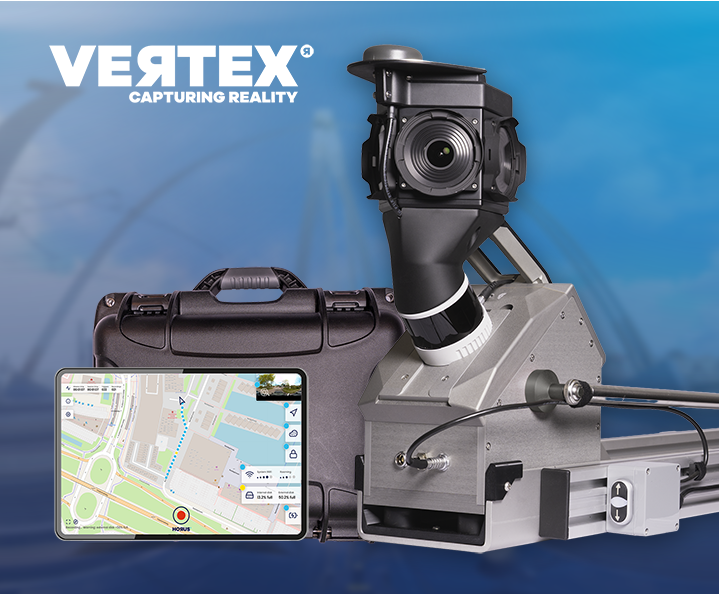
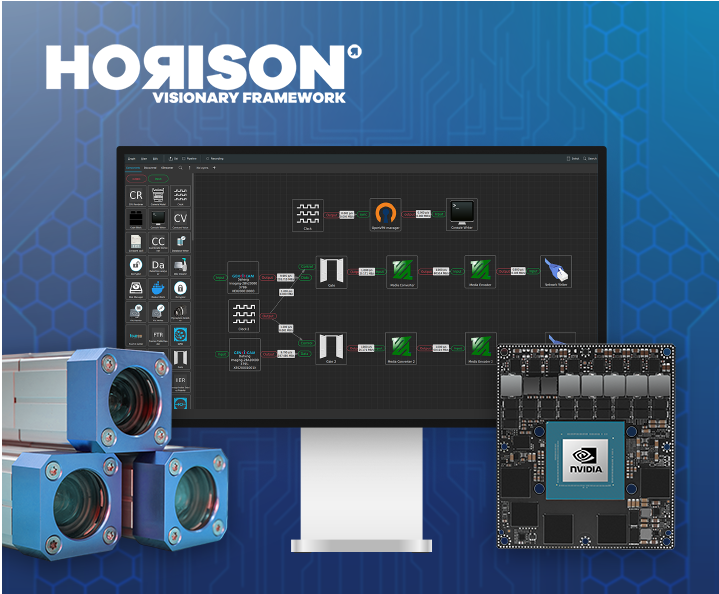
Live at Intergeo Munich, 15–17 Sept: Horison Framework and our newest Vertex Turnkey Mobile Mapping System in action!
 Mobile mapping generates more data every year. Higher resolution cameras, denser LiDAR point clouds, larger projects. Processing all of that through a central cloud pipeline is starting to show its limits.
The cost of cloud-based processing
Every mobile mapping project that runs on cloud processing carries the same three costs: bandwidth, time, and delay. Data has to travel before it can be used, and that travel adds up.
Gartner expects 30% of enterprises to rely on edge computing by 2029. NTT Data reports that 70% of organizations are already fast-tracking edge adoption to work around bandwidth costs, lock-in and latency. CIO research puts current edge adoption at 65% of companies across a dozen-plus industries, with 83% saying it will be essential to stay competitive.
For mobile mapping specifically, the issue is not data volume. It is where that data gets processed.
Processing at the point of capture
Horus builds edge computing directly into its mobile mapping systems, using NVIDIA-powered Jetson boards with TensorRT for on-device processing. That means:
- Real-time JPEG conversion and LAS generation, so raw data doesn’t need to move before it’s usable
- On-device image stitching, keeping information value while reducing data volume
- Edge-based position correction, so data quality is checked before transmission, not after
The result: less data leaves the vehicle, and what does leave is already close to final output.
What this means for your operation
IDC describes edge as infrastructure that extends what core datacenters can do, closer to where data originates. For mobile mapping teams, that translates into three concrete gains:
- Lower cloud processing costs, because less raw data needs to be transferred and processed centrally
- Faster turnaround, since processing happens in the field instead of after upload
- Higher collection frequency, because processing costs no longer limit how often you can capture
IDC projects global edge computing spend to reach $378 billion by 2028. For organizations running mobile mapping at scale, that shift already changes the cost equation.
Built through co-creation
Every fleet, workflow and data pipeline is different. That’s why Horus builds edge computing configurations through co-creation, working directly with your team instead of asking you to adapt to a fixed setup.
That process runs in three steps:
- Needs assessment: mapping your current systems, workflows and objectives before any technical decision is made
- Solution design: choosing the hardware, sensors and processing setup that fit your actual use case, not a generic template
- Structured implementation: a clear roadmap with milestones, so you know what to expect and when
Teams that go through this process end up with a system that fits their operation, not one they have to adapt to.
Next steps
- Talk to our team about your current data collection setup
- Co-create a configuration built around your workflow
- Run a pilot to validate performance in the field
- Scale across your operation once results hold up
If cloud processing costs and delays are already showing up in your mobile mapping operation, it’s worth a conversation about what edge computing changes.
Talk to our team about edge computing for your mobile mapping operation.