Roads are the backbone of any transportation network, and keeping them safe and efficient depends on one thing above all: knowing their actual condition. That’s where road surface inspection for road asset management comes in. It’s the systematic process of capturing and assessing pavement condition, and it relies heavily on the Pavement Condition Index (PCI) to turn raw observations into data that guides maintenance budgets and priorities.
This guide walks through what road surface inspection involves, how the PCI fits into the process, and — most importantly — how to pick the camera hardware that matches your project’s needs.
What is road surface inspection and why does it matter?
Road surface inspection is the practice of systematically capturing and evaluating pavement condition, whether for routine maintenance planning, pre-construction surveys, or post-disaster assessments. The images and data collected during inspection feed directly into asset management decisions, so the quality of that capture determines the quality of every decision downstream.
The role of the pavement condition index in Road Surface Inspection
The Pavement Condition Index (PCI) is a standardized numerical rating, from 0 (failed) to 100 (excellent), that quantifies pavement health. It’s built from three main distress factors: surface distress (cracking, potholes, rutting and other visible wear), roughness (drivability, often measured through the International Roughness Index), and structural integrity (the pavement’s ability to carry traffic loads without damage).
For road surface inspection specifically, surface distress is the primary factor captured and analyzed through imagery, making it the cornerstone of any visual inspection program.
What your road surface inspection project actually needs
Not every road surface inspection project has the same requirements. Three factors typically shape the hardware and workflow you’ll need: the purpose of the inspection (routine maintenance, pre-construction, or post-disaster), the specific assets in scope (pavement surface only, or also right-of-way objects like signage, lighting, guide rails and drainage), and local regulatory standards, which can shift the focus from fine details like raveling to more prominent distress such as large potholes.
Choosing the right camera for road surface inspection
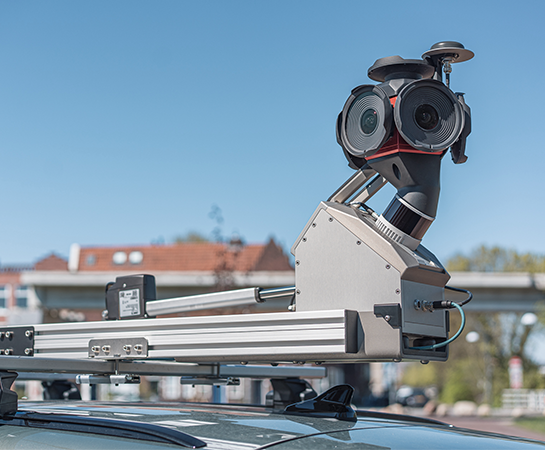
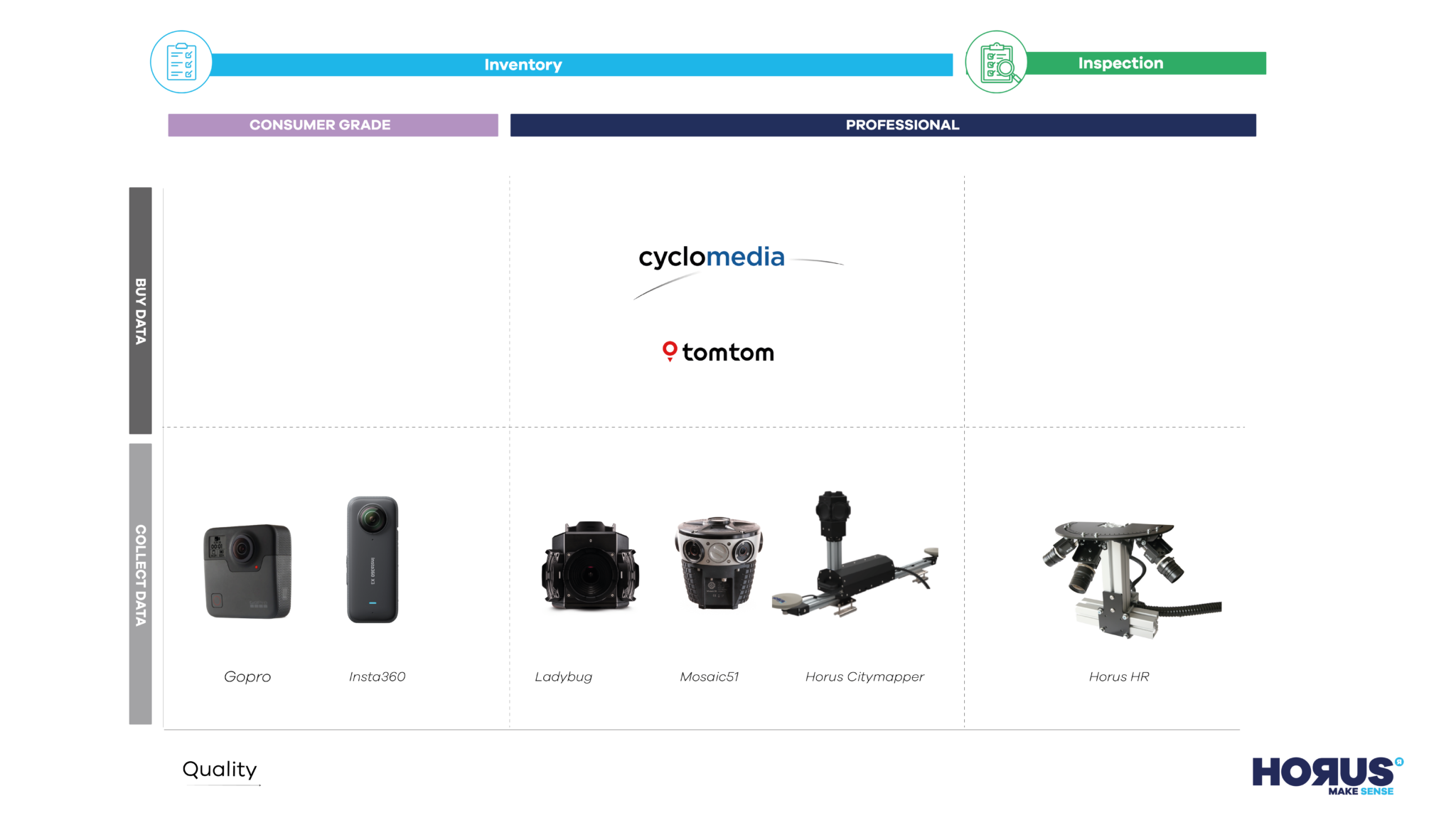
Camera choice is the single biggest factor in the quality of your road surface inspection data. Consumer-grade cameras such as GoPro and Insta360 are affordable, portable, and capture a wide field of view, making them suitable for general, lower-detail assessments. Their main limitation is resolution and, often, weaker GPS/GNSS positioning accuracy and synchronization, both of which affect how usable the data is for precise inspection work.
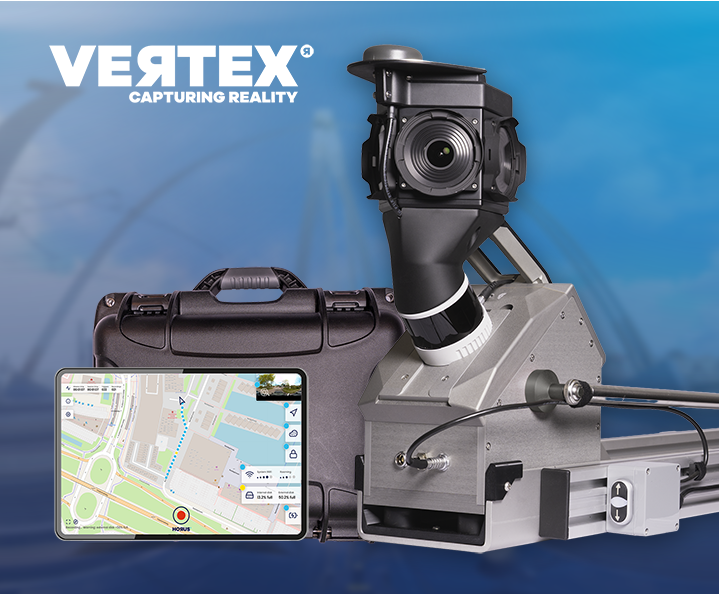
Specialized systems such as Vertex, Mosaic, and Horus High Resolution (HR) cameras are built for a different level of detail. Ladybug and Mosaic deliver panoramic, high-resolution imagery suited to detailed inspection over large areas. Horus HR cameras go a step further, purpose-built for road surface inspection, capturing resolution fine enough to detect even small pavement defects and support comprehensive damage assessment.
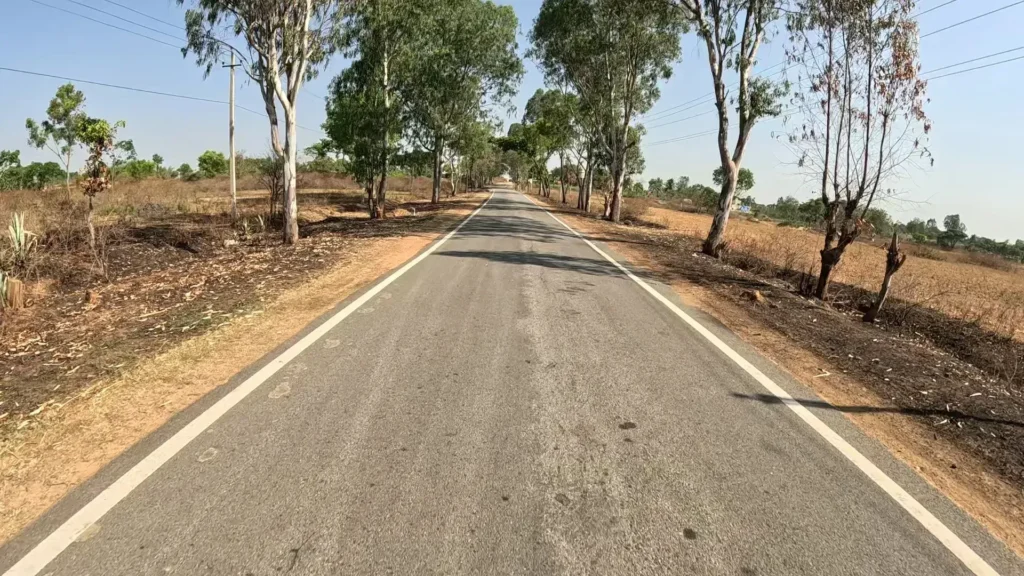
GoPro
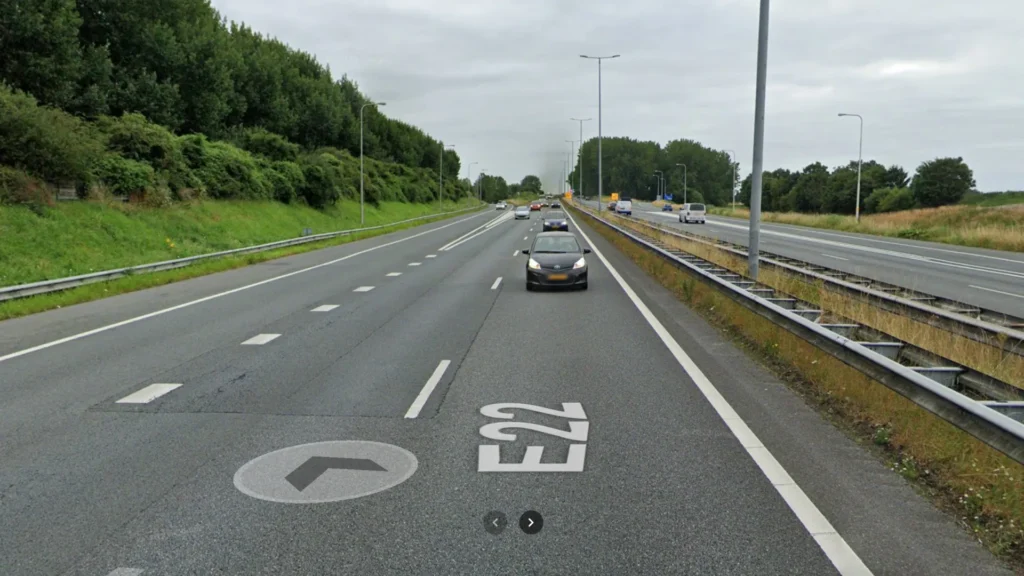
Streetview
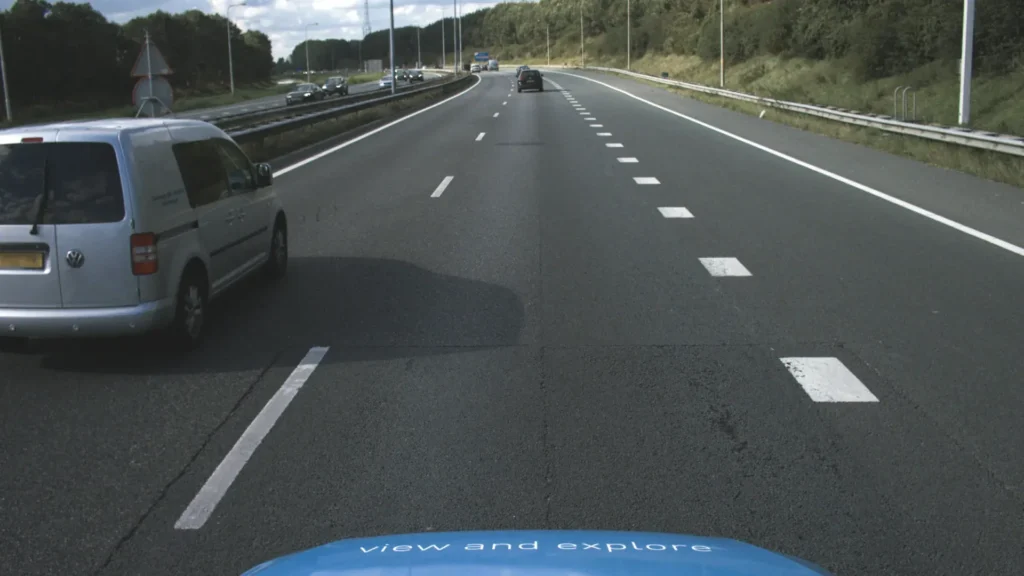
Horus HR front
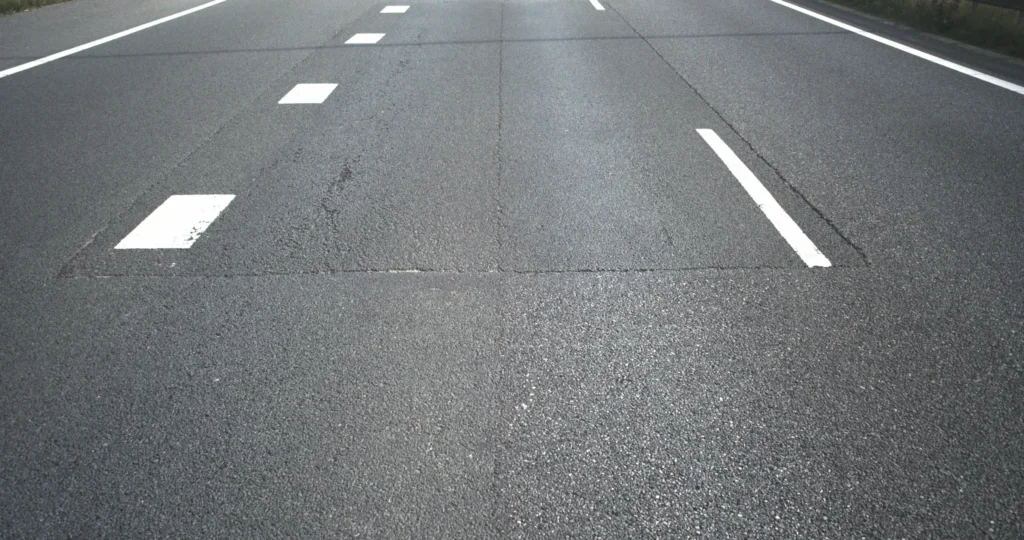
Horus HR back
From capture to insight: setting up the inspection workflow
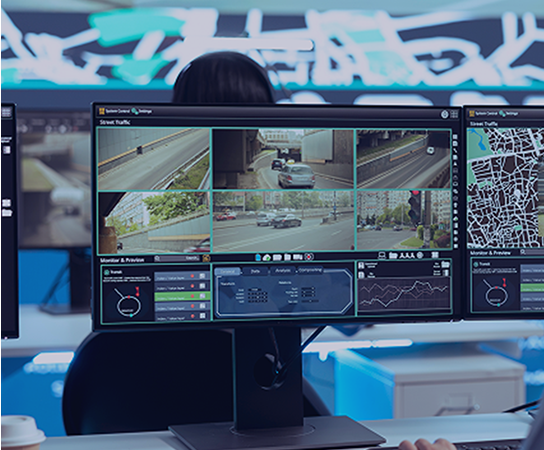
Capturing high-resolution imagery is only half of a road surface inspection workflow. Horus’s Layermanager turns that imagery into structured, usable data: it lets teams build customized inspection forms for the exact attributes they need to track (crack length, pothole dimensions, raveling severity), collect that attribute data directly in the field, and map it automatically into GIS, where damage extent is calculated and visualized spatially.
The result is a workflow that replaces subjective, manual assessment with objective, mapped data that decision-makers can act on directly.
Why Horus for road surface inspection
Bringing high-resolution imagery and structured data collection together in one workflow means less guesswork, faster assessment of large road networks, and maintenance decisions backed by accurate, auditable data rather than manual judgment calls.
Conclusion
The right camera for road surface inspection depends entirely on the project: a consumer-grade GoPro or Insta360 may be enough for a broad, low-detail survey, while projects that need defect-level accuracy call for specialized systems like Horus HR. Matching the hardware to the requirement is what makes a road surface inspection program reliable at scale.
Talk to our team about road surface inspection cameras and find the right setup for your project.
Ready to start mapping?
Talk to our team about your use case. We’ll help you find the right configuration.